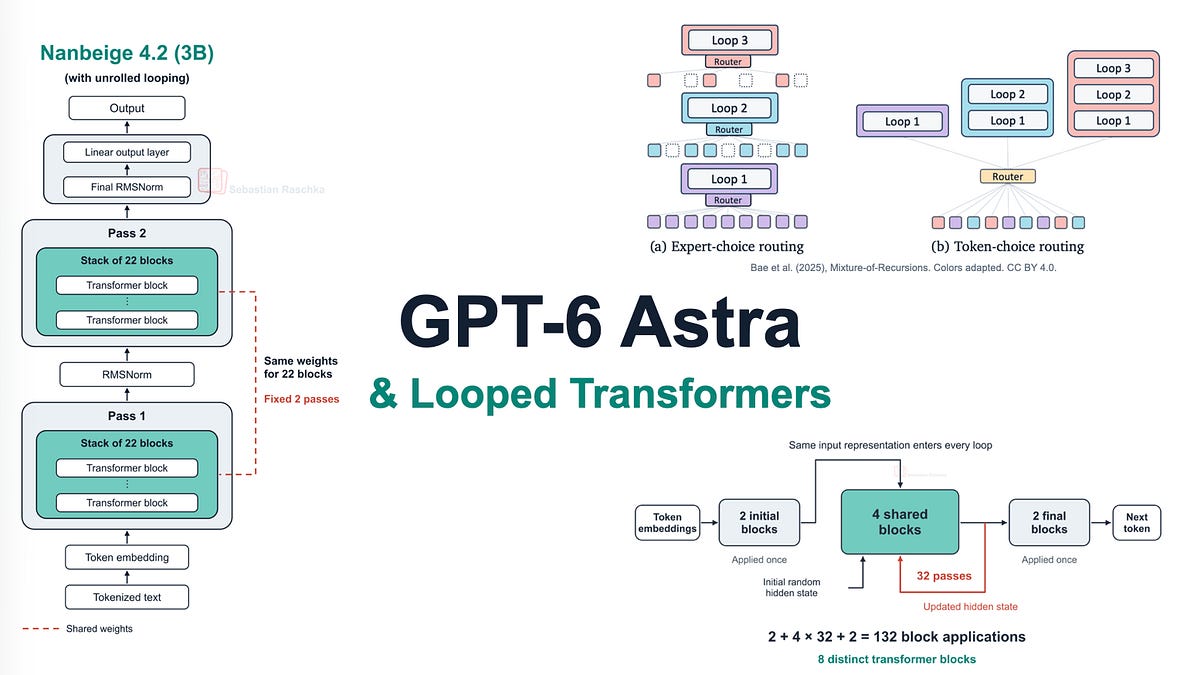
 GPT-6 Astra's computer use capabilities and Looped Transformers architectureRead the article English (automatic translation) |
SummarySebastian Raschka shares his first-hand impressions of GPT-6 Astra's strong performance, particularly in 3B rendering, coding, and GUI-based computer use. He then explains recurrent transformer and iterative depth architectures. The piece also touches on rumors that Astra hides its reasoning traces and recent research on recurrent blocks. |
Why it mattersThe ability to operate a local GUI with a mouse and keyboard represents a practical step toward transitioning agents from API/CLI-based usage to general-purpose desktop automation, potentially lowering access barriers for non-technical users. The discussion of recurrent transformers is significant as it signals a structural departure from standard feedforward stacks, with implications for inference costs and interpretability. The hidden reasoning aspect is also critical for transparency and trust in frontier models. |
Highlights
|
Critical takeThe article is largely anecdotal, relying on two days of personal use. The most striking figure, the 99.9% ARC-AGI-3 result, comes from a single, relatively narrow benchmark. The author acknowledges that agentic scores may not reflect reality in Astra's own test environment, which could have mixed implications for readers. Additionally, the piece cuts off without detailing recurrent transformer mechanics or the hidden reasoning claim, meaning the headline's most provocative topic is only implied and not supported by concrete data. |