 Ethical principles for implantable brain-computer interfaces must be clarifiedRead the article English (automatic translation) |
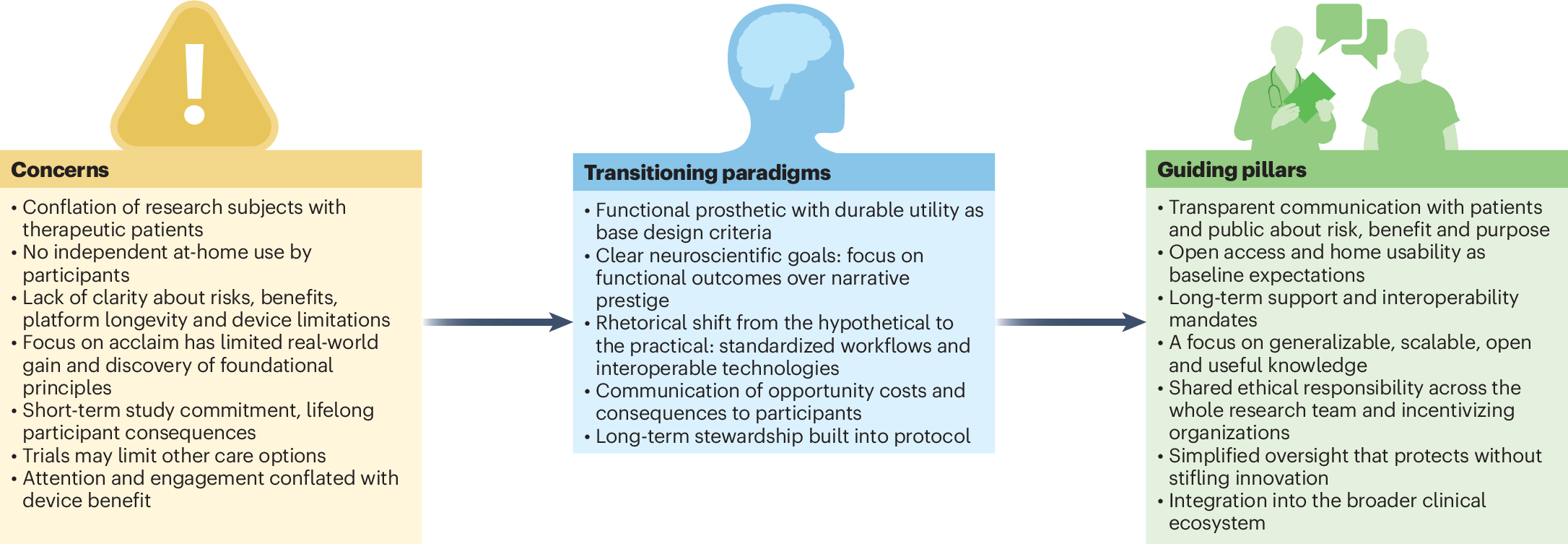
SummaryMiller, Giampiccolo, Akram, and Schalk argue in a commentary published in Nature Neuroscience that the field must codify its ethical principles as implantable brain-computer interfaces (BCIs) transition from the laboratory to the clinic. These principles should distinguish between research participation and patient care, provide long-term support to participants, prevent disproportionate risk burdens, and ground studies in genuine clinical objectives. |
Why it mattersImplantable BCIs are scaling rapidly. Neuralink, Synchron, and academic teams are all moving toward human trials. However, the ethical and regulatory framework is lagging behind the technology. Without clear norms regarding who bears the risk, who benefits, and what happens if a device is withdrawn, vulnerable patients with conditions like paralysis or epilepsy could be exploited as de facto test subjects. The article is significant because it attempts to establish a common terminology before the new wave of commercial and clinical deployments makes answering these questions more difficult. |
Highlights
|
Critical takeThe piece reads more like a statement of position than a rigorous ethical analysis. Although it cites the Belmont Report and the 2024 GAO report, it does not confront specific regulatory gaps that would actually constrain commercial BCI companies (such as FDA's break-the-seal procedures or the EU MDR). Furthermore, the fact that one author (Akram) is the principal investigator of Neuralink's GB-PRIME trial creates a notable conflict of interest, even if explicitly declared. Co-authoring an article that calls for a 'meaningful clinical purpose' while the company's product line is still largely in the exploratory phase raises questions about whether the authors are trying to align the ethical narrative with the existing commercial roadmap or to constrain it. |