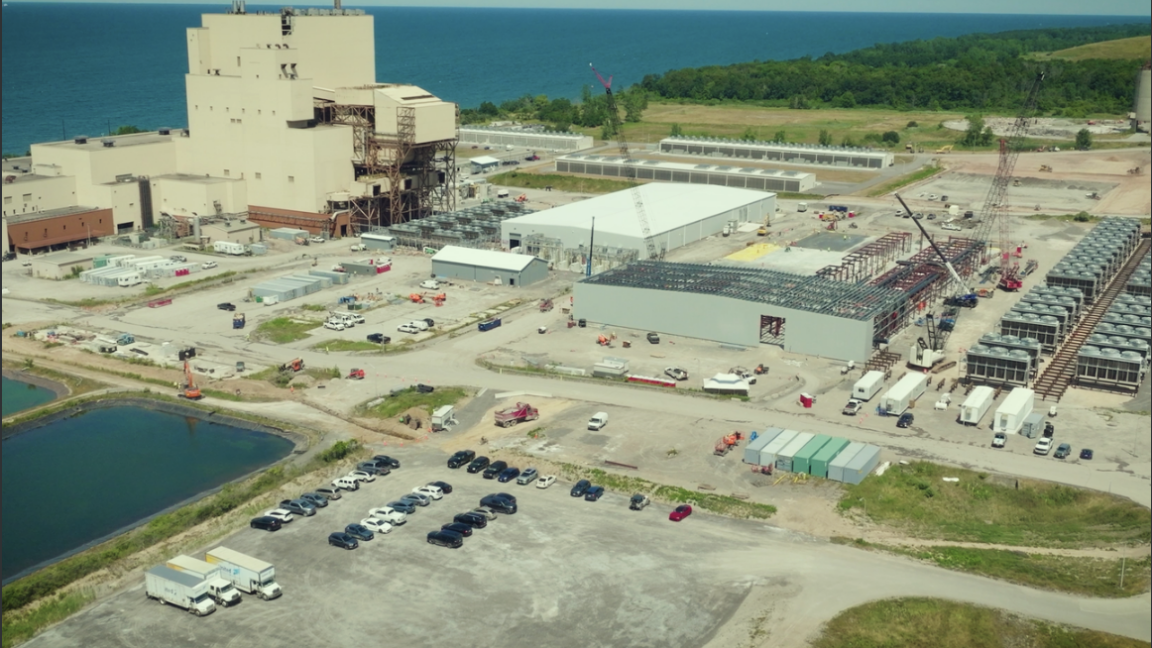
 Responsibility confusion in $3.2 billion AI data center fireRead the article English (automatic translation) |
SummaryThe fire at the unfinished, $3.2 billion Lake Mariner AI data center in Somerset, New York, exposed the tangled web of interests involving companies like TeraWulf, Fluidstack, Google, and Anthropic. None of them could be clearly held responsible for the missing alarm systems, non-functional hydrants, and burned safety documents. This situation left local firefighters in a state of 'partial blindness.' |
Why it mattersThe incident concretizes the systemic accountability gap in AI infrastructure construction. When ownership, operation, financing, and compute demand are shared among four or more entities, legal, operational, and financial responsibilities become genuinely fragmented. As data centers consume hundreds of megawatts of electricity and grid costs are distributed among all subscribers, the absence of a single responsible party for safety, environmental, and community commitments is not an anomaly but a structural risk. |
Highlights
|
Critical takeThe article relies on good sources but fails to clearly specify whether TeraWulf, Fluidstack, or the property owner is the entity that failed to provide or update safety documents. This indicates that the 'accountability confusion' diagnosed in the text is not sufficiently scrutinized in its own reporting. Additionally, the text over-relies on a single fire incident while generalizing about the entire sector. The final section, cut off by a resident's noise complaint, weakens the article's strong structural argument. |