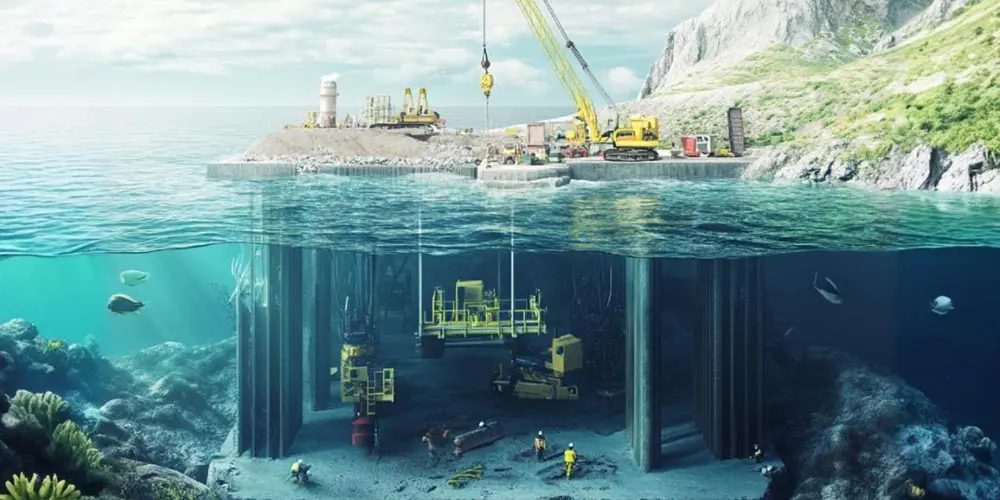
 DARPA investigates autonomous underwater 3D printing for port constructionRead the article |
SummaryDARPA is seeking industry and academic partners to develop autonomous robotic systems capable of 3D printing concrete using locally sourced sand, clay, and seawater on the seabed. The project targets depths of up to 100 meters for the construction, repair, and protection of ports, piers, seawalls, and submarine cables. |
Why it mattersApproximately 45% of U.S. Coast Guard facilities have exceeded their expected service life. Current underwater construction methods are described as slow, expensive, and logistically heavy. A truly autonomous printing platform could dramatically reduce deployment times and material transport costs for critical marine infrastructure. This initiative is also part of DARPA's broader push into autonomous systems and AI-driven material adaptation. It could fundamentally change how aging naval and commercial ports are maintained. |
Highlights
|
Critical takeThe article reads more like a press release summary than a technical assessment. No budget, timeline, or prototype details are provided for the underwater printing project. The role of AI is reduced to a single, vague sentence about 'evaluating sediment properties.' Fundamental engineering challenges such as pressure at 100 meters, material distribution, underwater curing, and robotic dexterity are entirely ignored. Compressing three distinct DARPA programs into a single narrative may exaggerate how close the underwater printing concept is to a working system. |