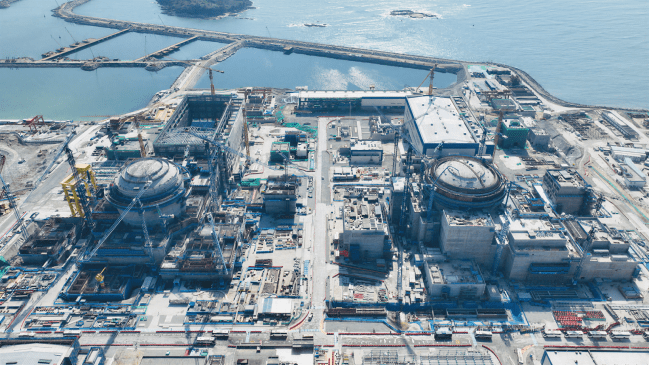
 China makes major nuclear expansion move, adds four new projects in $25 billion energy investmentRead the article English (automatic translation) |
SummaryChina has approved four new nuclear energy projects with an investment exceeding $25 billion. A total of eight new units will be constructed in the provinces of Zhejiang, Guangdong, Liaoning, and Shandong. The projects include both Hualong One 2.0 and Guohe One third-generation reactor designs. The Laiyang plant in Shandong province, with a cost of approximately $18 billion, will become the country's largest nuclear plant in terms of installed capacity once all six of its units are operational. |
Why it mattersThis expansion reinforces China's position as the world's leading nuclear builder. Since 2022, at least ten new reactor units have been approved annually. This indicates that nuclear power is viewed not as a niche supplement, but as a fundamental pillar of the low-carbon grid. The inclusion of private capital in Jinqimen and steps toward standardizing Guohe One construction signal that Beijing is attempting to industrialize and scale nuclear energy as a driver of domestic manufacturing and infrastructure, rather than merely an energy source. |
Highlights
|
Critical takeThe text reads like a compilation of direct language from Chinese state media and corporate press releases (Global Times, CGN Power, SPIC), lacking independent commentary. There is no independent assessment of safety records, spent fuel management, or the geopolitical signals sent by such rapid construction. Furthermore, the figure of 'eight new units' contradicts the plant-based unit counts provided later in the text. This forces the reader to perform the arithmetic themselves. |