 Can Laws Be Flexible? Rethinking Legislation for InnovationRead the article English (automatic translation) |
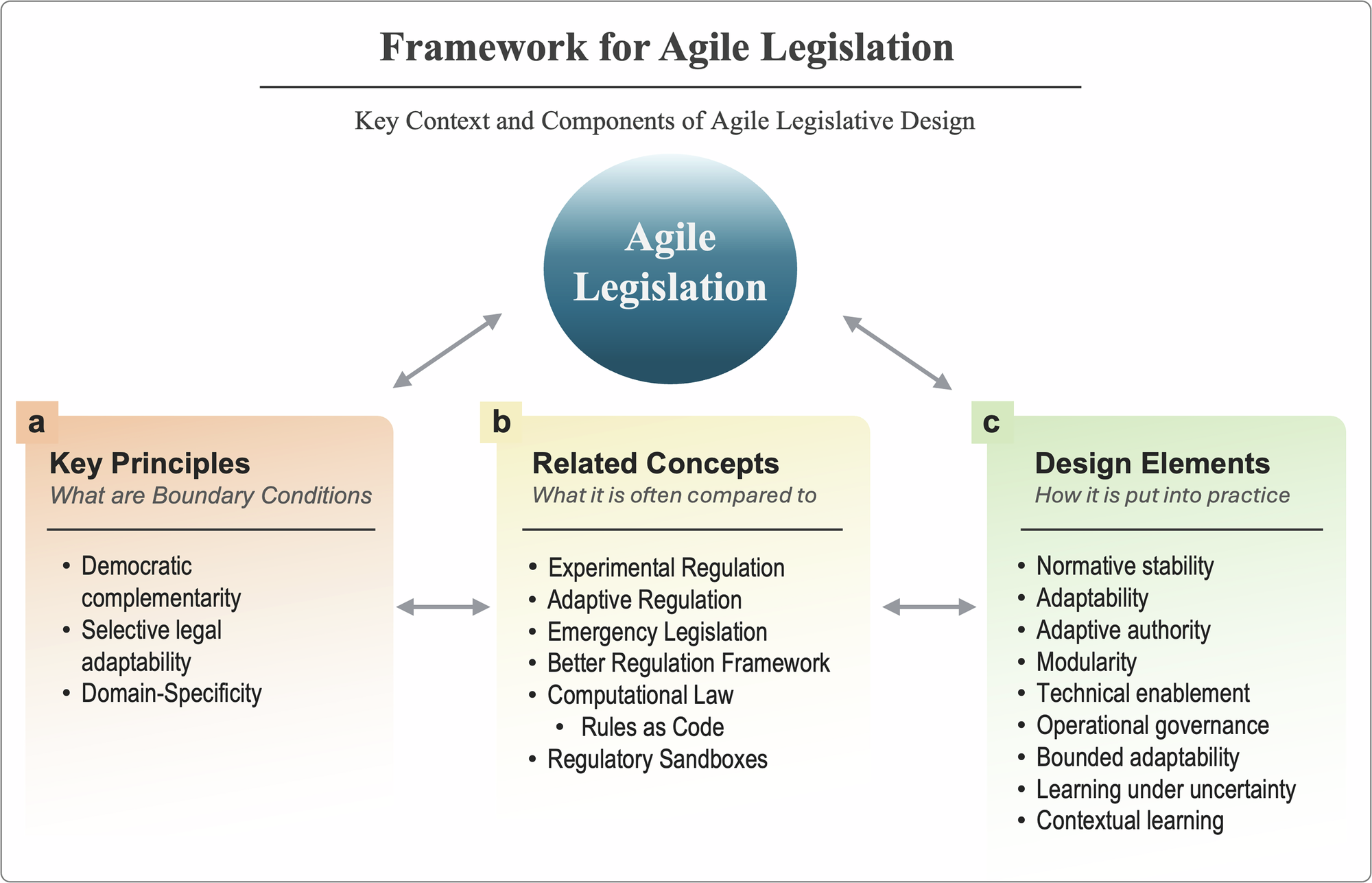
SummaryA commentary in npj Digital Medicine proposes the concept of 'agile legislation,' which translates iterative, sprint-based, and feedback-driven principles from software development into lawmaking. The article illustrates this through examples such as Germany's digital health law, the EU AI Act, and the US FDA's user fee renewal process. The authors position this approach as an institutional design concept for embedding structured evidence generation and revision cycles into regulatory loops. |
Why it mattersHealthcare and AI regulations are evolving faster than traditional legislative cycles, creating a gap between technological reality and legal response. If the proposed feedback and revision architecture can be institutionalized without eroding due process principles, it could shorten the lag between innovation and consistent oversight. The article is also significant for clearly distinguishing procedural safeguards (the protected element) from administrative structures that hinder evidence integration (the targeted element). This distinction, which often becomes blurred in policy debates, is a key highlight of the piece. |
Highlights
|
Critical takeThe article reads more like a manifesto than a testable proposal. It defines a dictionary entry, outlines a three-layer framework, and references case studies, but it fails to provide measurable criteria to determine when 'agility' is successful or unsuccessful. It also ignores the political economy issue of who bears the cost of continuous revision. Borrowing concepts like 'sprint' and 'iteration' from software engineering carries the risk of importing a metaphor whose success depends on small, technically literate teams and clear product specifications. These conditions are structurally absent in multi-stakeholder, multi-jurisdictional legislative processes. |